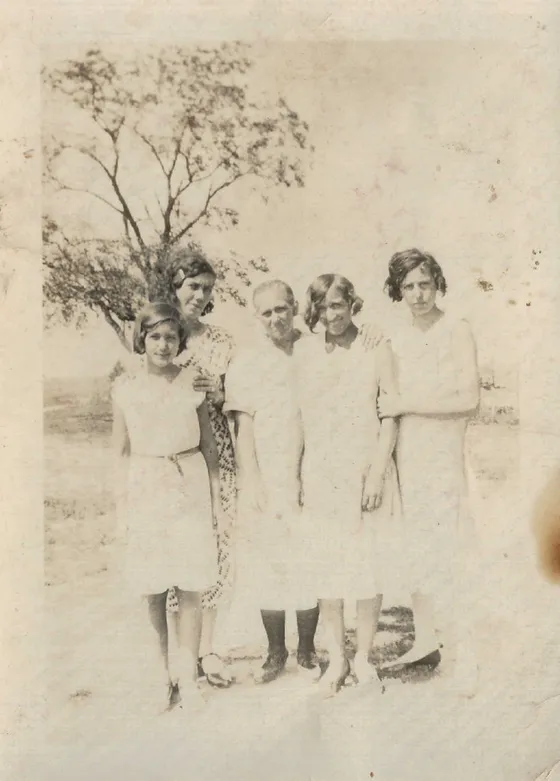
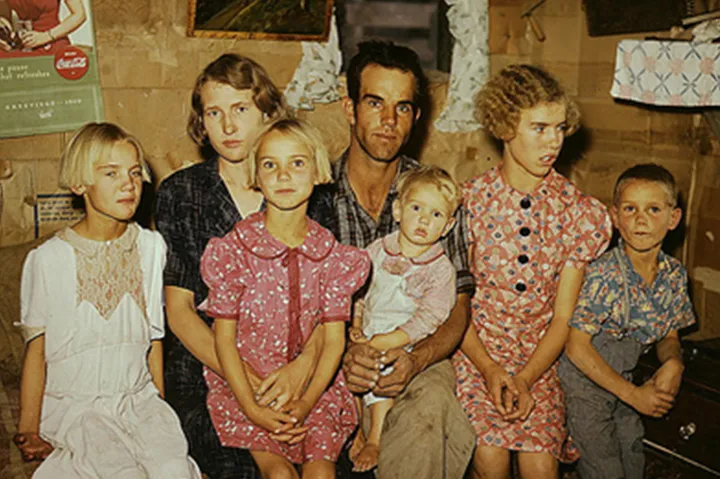
During the Great Depression (1929–1945), money was very tight for everyone in the United States. Young children like Veleta often worried about finding what they needed. When clothes wore out, they were hard to replace. At the same time, foodstuffs like sugar were scarce. Everyone had to make do with what they had. They reused and repaired everything, including turning flour sacks into dresses.
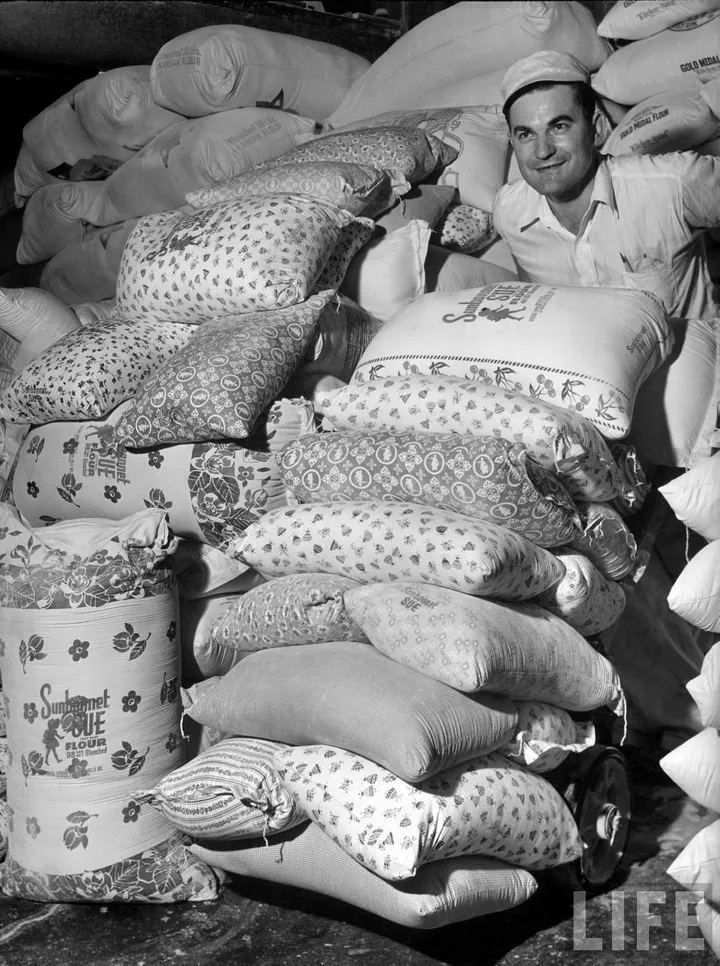
No one is quite sure who thought to turn a flour sack into a dress first. However, in October 1924, Mr. Asa T. Bales submitted the first patent in Missouri for a line of patterned cotton sacks. He assigned his patent to the George P. Plant Milling Co. in St. Louis for checkered patterns with exciting names like “Gingham Girl,” “Baby Gingham” and “Gingham Queen.” Eventually, other bags that at first held flour, sugar, salt, and more became the fabric of choice for over 3.5 million Americans. Soon, companies manufactured bags out of fabrics like osnaburg, sheeting, percale, muslin, and even chicken linen. Americans sewed these fabrics into dresses, shirts, underwear, bibs, aprons, trousers, dishtowels, quilt backing, and drapery.